


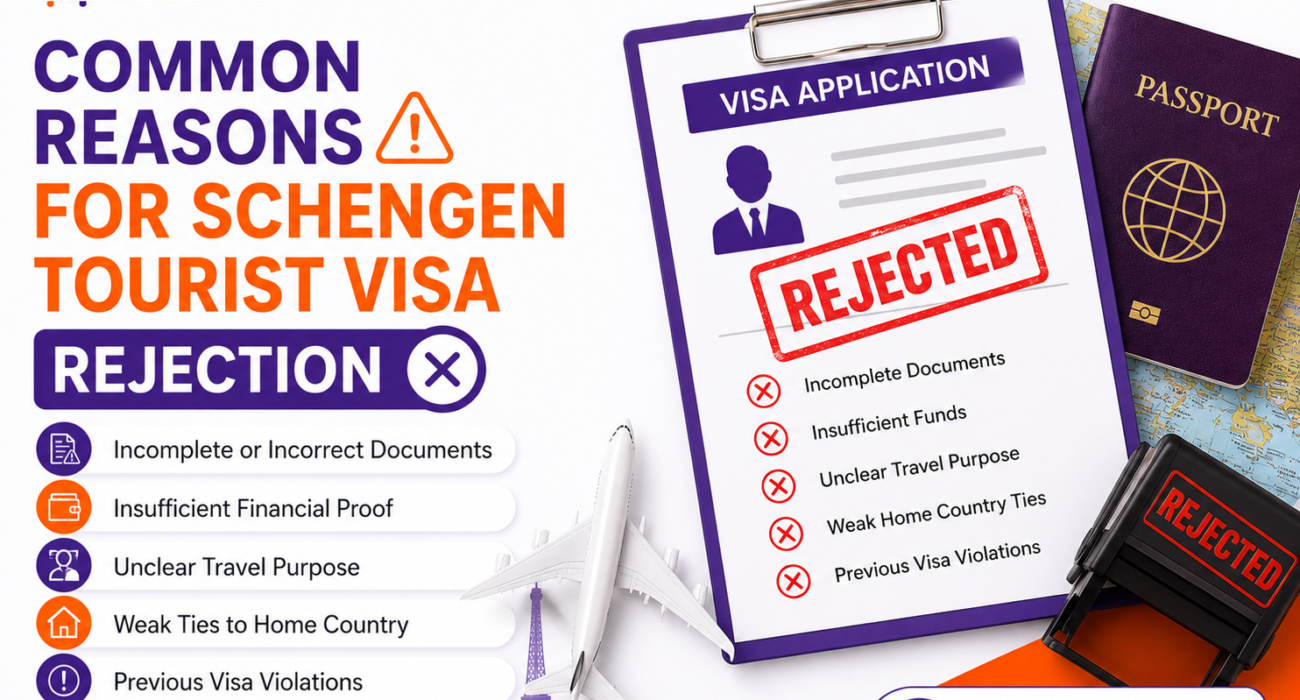
Applying for a Schengen tourist visa can be an exciting step toward exploring Europe, but receiving a visa refusal can be disappointing and costly. Although many applications are approved every year, rejections still occur due to avoidable mistakes or insufficient supporting documents. Understanding the common reasons for Schengen tourist visa rejection can help applicants prepare stronger applications and improve their chances of approval.
Why Do Schengen Tourist Visa Applications Get Rejected?
Schengen visa authorities carefully assess each application to ensure applicants meet all requirements. If there are doubts regarding finances, travel intentions, documentation, or eligibility, the visa may be refused.

1. Insufficient Financial Proof
One of the most common reasons for Schengen visa rejection is failing to demonstrate adequate financial resources. Applicants must prove they have enough money to cover accommodation, transportation, daily expenses, and return travel.
Common Financial Mistakes
- Low bank balance.
- Irregular transactions.
- Recent unexplained large deposits.
- Incomplete bank statements.
- Lack of proof of income.
2. Incomplete or Incorrect Documentation
Missing or inaccurate documents can lead to immediate refusal. Every document submitted should be valid, genuine, and consistent with the information provided in the application form.
Examples of Documentation Errors
- Missing travel insurance.
- Expired passport.
- Unsigned application forms.
- Incorrect information.
- Missing accommodation or flight reservations.
3. Lack of Clear Travel Purpose
Applicants must clearly explain the reason for visiting the Schengen Area. If visa officers are unconvinced about the purpose of travel, they may reject the application.
Supporting Documents That Help
- Detailed travel itinerary.
- Hotel bookings.
- Return flight reservations.
- Invitation letters, if applicable.
4. Invalid or Inadequate Travel Insurance
Schengen visa applicants are required to have travel medical insurance covering at least €30,000 for medical emergencies, hospitalization, and repatriation. Inadequate insurance coverage can result in refusal.
5. Weak Ties to Your Country of Residence
Visa officers want assurance that applicants will return home after their trip. If they believe there is a risk of overstaying, the visa may be denied.
Examples of Strong Home Ties
- Permanent employment.
- Business ownership.
- Family commitments.
- Property ownership.
- Educational commitments.

6. Previous Immigration Violations
Previous visa overstays, deportations, or violations of immigration laws can negatively affect future visa applications. Authorities often review applicants’ travel histories before making decisions.
7. Suspicious or False Documents
Submitting forged or misleading documents is a serious offence and can result in immediate refusal and possible future visa bans.
8. Insufficient Travel History
While having no previous international travel does not automatically lead to rejection, a limited travel history may prompt additional scrutiny. Applicants should ensure the rest of their documentation is strong and complete.
9. Passport Issues
Your passport must meet Schengen requirements. Problems with the passport can cause delays or refusals.
Common Passport Problems
- Passport expiring within three months after the planned return date.
- Damaged passport.
- Insufficient blank pages.
- Expired passport.
10. Inconsistent Information in the Application
Any discrepancies between the application form and supporting documents may raise concerns. Visa officers carefully review information regarding employment, finances, travel plans, and accommodation.
How to Avoid Schengen Tourist Visa Rejection
- Submit complete and accurate documents.
- Provide genuine financial evidence.
- Maintain a healthy bank balance.
- Purchase compliant travel insurance.
- Prepare a clear travel itinerary.
- Demonstrate strong ties to your country of residence.
- Double-check all information before submission.

What Should You Do If Your Schengen Visa Is Rejected?
If your visa application is refused, you will receive a refusal letter explaining the reasons for the decision. Depending on the country, you may have the option to appeal the decision or submit a fresh application with stronger supporting documents.
Final Thoughts
Most Schengen tourist visa rejections occur because of avoidable mistakes such as insufficient financial proof, incomplete documents, inconsistent information, or weak evidence of returning home after the trip. Careful preparation and accurate documentation can significantly improve your chances of obtaining a Schengen visa and enjoying a stress-free European holiday.
Frequently Asked Questions (FAQs)
What is the most common reason for Schengen visa rejection?
Insufficient financial proof and incomplete documentation are among the leading causes of Schengen visa refusal.
Can I apply again after a Schengen visa rejection?
Yes. You can submit a new application after addressing the issues mentioned in the refusal letter.
Does a previous visa refusal affect future applications?
Not necessarily. A stronger and more complete application can improve your chances of approval.
Can false documents lead to a visa ban?
Yes. Submitting forged or misleading documents can result in rejection and possible restrictions on future applications.
How can I improve my chances of Schengen visa approval?
Provide complete documents, maintain sufficient funds, obtain valid travel insurance, and present a clear travel plan supported by strong ties to your country of residence.