
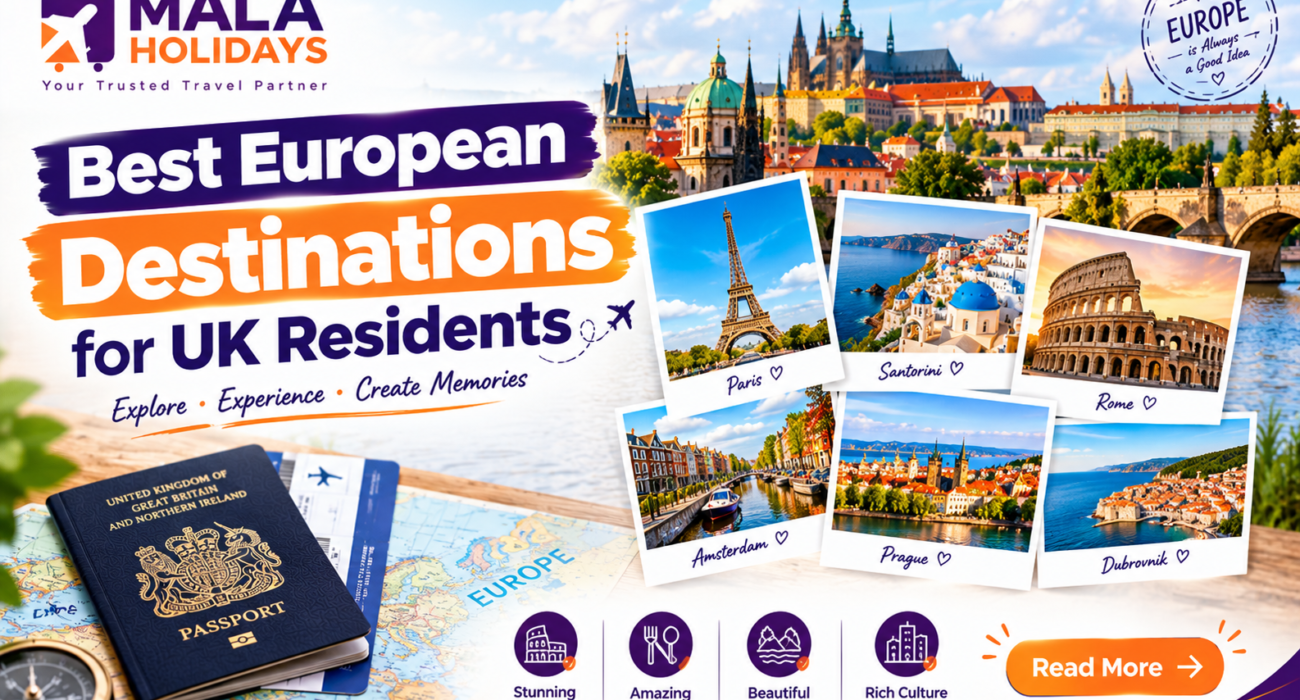
Europe offers an incredible variety of holiday experiences, from sunny Mediterranean beaches and historic cities to peaceful mountain villages and exciting cultural destinations. For UK residents planning their next getaway, Europe is an excellent choice because many destinations can be reached with relatively short flights, while some are also accessible by train or ferry.
In this guide, Mala Holidays explores the best European destinations for UK residents, including popular attractions, ideal travel seasons, practical planning tips and important visa information to help you prepare for your next trip.
Quick Overview: Best Places to Visit in Europe
| Destination | Best For | Suggested Stay | Best Travel Period |
|---|---|---|---|
| Spain | Beaches, food and nightlife | 5–10 days | April–June, September–October |
| Italy | History, culture and cuisine | 7–10 days | April–June, September–October |
| Portugal | Coastal scenery and city breaks | 5–8 days | March–June, September–October |
| France | Romantic holidays and culture | 4–8 days | April–June, September |
| Greece | Islands, beaches and ancient sites | 7–10 days | May–June, September |
| Netherlands | Canals, museums and short breaks | 3–5 days | April–May, September |
| Czechia | Architecture and city breaks | 3–5 days | April–June, September–October |
| Austria | Mountains, music and winter holidays | 4–7 days | May–September, December–March |
Note: Suggested trip lengths and travel seasons are general planning recommendations. Weather, prices and opening times vary by destination and year.
1. Spain: Best for Beaches, Food and Family Holidays
Spain is one of the most appealing European destinations for travellers from the UK. It combines warm weather, beautiful beaches, lively cities, traditional cuisine and a wide choice of accommodation. From relaxing seaside resorts to cultural city breaks, Spain offers options for many types of holiday.
Top Places to Visit in Spain
- Barcelona: Explore the famous Sagrada Família, Park Güell, the Gothic Quarter and the city’s beaches.
- Madrid: Discover renowned art museums, elegant parks, historic squares and traditional Spanish restaurants.
- Malaga: Enjoy a Mediterranean atmosphere, sandy beaches, historic attractions and access to the Costa del Sol.
- Alicante: Relax beside the Mediterranean, visit Santa Bárbara Castle and explore the waterfront.
- Majorca: Enjoy scenic coves, coastal villages and family-friendly beach resorts.
Best Time to Visit Spain
Spring and early autumn are excellent periods for sightseeing because temperatures are often more comfortable than during the peak summer months. Summer is popular for beach holidays, although flights and accommodation can become more expensive during school holidays.
Why Choose Spain?
Spain is a strong choice for families, couples, groups of friends and travellers looking for a mix of beaches, sightseeing and entertainment. Compare destinations and accommodation before booking to find an option that matches your budget.
2. Italy: Best for History, Culture and Food
Italy is ideal for travellers who want to combine historical landmarks, impressive architecture, scenic coastlines and world-famous cuisine. From ancient Roman monuments to Renaissance art and picturesque countryside, the country offers a diverse travel experience.
Top Places to Visit in Italy
- Rome: Visit the Colosseum, Roman Forum, Trevi Fountain and other historic landmarks.
- Venice: Explore the canals, St Mark’s Square and the city’s distinctive historic neighbourhoods.
- Florence: Discover Renaissance art, impressive architecture and traditional Tuscan food.
- Milan: Enjoy fashion, shopping, museums and the city’s famous cathedral.
- Amalfi Coast: Experience coastal villages, scenic views and Mediterranean landscapes.
Best Time to Visit Italy
April to June and September to October are often suitable for exploring Italian cities and historic attractions. July and August can be particularly hot and busy in popular tourist areas.
Why Choose Italy?
Italy is an excellent destination for couples, history enthusiasts, food lovers and first-time visitors to Europe. For a first trip, consider focusing on two or three destinations instead of trying to visit the entire country in one holiday.
3. Portugal: Best for Coastal Scenery and Relaxed City Breaks
Portugal is a popular choice for travellers seeking attractive coastlines, historic neighbourhoods, fresh seafood and a relaxed atmosphere. Its combination of city attractions and seaside destinations makes it suitable for both short breaks and longer holidays.
Top Places to Visit in Portugal
- Lisbon: Discover colourful streets, historic tram routes, viewpoints and traditional Portuguese cafés.
- Porto: Explore riverside streets, historic architecture and the scenic Douro River.
- Algarve: Enjoy sandy beaches, dramatic cliffs, coastal walks and seaside towns.
- Sintra: Visit historic palaces, gardens and the surrounding hills.
Best Time to Visit Portugal
Spring and early autumn are good choices for comfortable sightseeing and coastal exploration. Summer is popular for beach holidays, particularly in the Algarve, so advance booking can be helpful.
Why Choose Portugal?
Portugal may suit couples, solo travellers, families and visitors who want a combination of culture and coastal relaxation. Costs vary considerably by city, season and accommodation type, so compare the full holiday price rather than flights alone.
4. France: Best for Romance, Culture and Iconic Attractions
France offers a wide range of experiences, from famous landmarks and art galleries to wine regions, mountain scenery and Mediterranean beaches. It is also a convenient option for many UK travellers, with air, rail and ferry connections available on selected routes.
Top Places to Visit in France
- Paris: See the Eiffel Tower, Louvre Museum, Notre-Dame area and the city’s famous boulevards.
- Nice: Enjoy Mediterranean views, seaside walks and the atmosphere of the French Riviera.
- Lyon: Explore historic streets and discover a city celebrated for its food culture.
- Bordeaux: Visit elegant squares, riverside areas and cultural attractions.
- Strasbourg: Discover picturesque canals, traditional architecture and a distinctive blend of French and German influences.
Best Time to Visit France
Spring and autumn can be excellent for sightseeing, while summer is popular for coastal holidays and outdoor activities. Winter can also be appealing for festive markets and mountain destinations.
Why Choose France?
France is a good option for romantic breaks, art and history enthusiasts, food lovers and travellers seeking a varied itinerary. If travelling by train, compare journey times and ticket prices before deciding on your route.
5. Greece: Best for Islands, Beaches and Ancient History
Greece combines ancient landmarks, clear waters, traditional villages and a wide selection of islands. It is particularly attractive for summer holidays, although major archaeological sites and mainland cities can also be rewarding outside the busiest beach season.
Top Places to Visit in Greece
- Athens: Explore the Acropolis, the Parthenon and historic neighbourhoods.
- Santorini: Enjoy volcanic scenery, whitewashed villages and views across the caldera.
- Crete: Discover beaches, mountain landscapes, local cuisine and archaeological sites.
- Rhodes: Visit the historic Old Town and enjoy coastal resorts.
- Corfu: Experience green landscapes, beaches and historic architecture.
Best Time to Visit Greece
May, June and September are often attractive months for a balance of warm weather and sightseeing. July and August are peak travel months, so ferry tickets and accommodation should be arranged in advance where possible.
Why Choose Greece?
Greece is well suited to beach holidays, island-hopping trips, family breaks and cultural travel. If visiting several islands, plan ferry connections carefully and allow enough time for transfers.
6. Netherlands: Best for Short European City Breaks
The Netherlands is a convenient destination for a short holiday centred on canals, museums, historic architecture and cycling culture. Amsterdam is the best-known starting point, but other Dutch cities offer their own attractions.
Top Places to Visit in the Netherlands
- Amsterdam: Visit the Rijksmuseum, canal district and other cultural attractions.
- Rotterdam: Explore modern architecture, waterfront areas and contemporary cultural venues.
- Utrecht: Enjoy historic canals, cafés and a relaxed city atmosphere.
- The Hague: Discover museums, historic buildings and nearby seaside areas.
Best Time to Visit the Netherlands
April and May can be attractive for spring scenery, while September often offers pleasant conditions for city exploration. Weather can change quickly, so pack suitable clothing whatever the season.
Why Choose the Netherlands?
The Netherlands is suitable for couples, solo travellers, families and anyone interested in museums, architecture and compact city breaks. Book popular museum visits in advance when timed entry is required.
7. Czechia: Best for Architecture and Value-Focused City Breaks
Czechia, also known as the Czech Republic, is an appealing choice for travellers interested in historic streets, castles, architecture and traditional food. Prague is the main attraction for many first-time visitors, but the country has other destinations worth exploring.
Top Places to Visit in Czechia
- Prague: Visit Prague Castle, Charles Bridge, Old Town Square and the historic city centre.
- Český Krumlov: Explore a picturesque historic town and its castle complex.
- Brno: Discover museums, cafés, historic buildings and a lively cultural scene.
Best Time to Visit Czechia
Spring and autumn are good for sightseeing, while December attracts visitors interested in festive markets. Winter temperatures can be low, so plan your clothing accordingly.
Why Choose Czechia?
Czechia can be a good option for travellers looking for a European city break with historic character. Accommodation, dining and attraction prices vary by season and location, so check current rates before travelling.
8. Austria: Best for Mountains, Music and Scenic Rail Journeys
Austria offers a mix of elegant cities, Alpine scenery, lakes and traditional villages. It is a year-round destination, with summer hiking and sightseeing complemented by winter sports and seasonal markets.
Top Places to Visit in Austria
- Vienna: Explore imperial palaces, classical music venues, museums and traditional coffee houses.
- Salzburg: Discover historic streets, musical heritage and mountain views.
- Innsbruck: Enjoy Alpine scenery, outdoor activities and a picturesque city centre.
- Hallstatt: Visit a lakeside village surrounded by dramatic mountain landscapes.
Best Time to Visit Austria
May to September is generally suitable for hiking and sightseeing. December to March can be appealing for winter sports, depending on local snow conditions and resort opening dates.
Why Choose Austria?
Austria is a strong choice for nature lovers, couples, families and travellers interested in culture and mountain scenery. If you plan to visit several cities, investigate rail passes and point-to-point tickets to compare costs.
Which European Destination Is Best for Your Travel Style?
The best destination depends on what you want from your holiday. Consider the following options when narrowing down your choices.
- For beach holidays: Spain, Portugal and Greece offer a wide selection of coastal destinations.
- For history and culture: Italy, France, Greece and Czechia are excellent places to begin.
- For a short city break: Amsterdam, Paris, Prague and Rome offer plenty to explore over a few days.
- For mountains and nature: Austria offers Alpine landscapes, hiking and winter sports.
- For food lovers: Italy, Spain, Portugal and France offer distinctive regional cuisines.
- For families: Spain, Portugal, Italy and Greece have destinations with family-friendly attractions and accommodation.
- For a multi-country holiday: Consider combining nearby destinations connected by convenient trains or short flights.
How Much Does a European Holiday From the UK Cost?
The total cost of a European holiday depends on the destination, travel dates, accommodation standard, transport choices and activities. A short city break may cost considerably less than a week at a popular beach resort during the school holidays.
When calculating your budget, remember to include:
- Return flights, train tickets or ferry fares
- Hotel or holiday accommodation
- Airport transfers and local transport
- Meals, snacks and drinks
- Entry tickets and organised activities
- Travel insurance
- Applicable visa fees and visa application centre charges, if required
- Local tourist taxes or other destination-specific charges
To manage costs, compare different departure dates, consider travelling outside peak periods and book major attractions early when advance reservations are recommended. Always check the baggage allowance and cancellation terms before confirming a booking.
Do UK Residents Need a Visa to Visit Europe?
Visa requirements depend on your nationality, the country you are visiting and the purpose and length of your trip. Living in the UK does not automatically give every resident the same entry rights.
For British Citizens
British citizens generally do not need a short-stay Schengen visa for tourism visits of up to 90 days in any rolling 180-day period. This allowance applies across the Schengen Area collectively, not separately to each country.
Travellers must still meet passport validity and other entry conditions. Longer stays, employment and certain other activities may require permission from the destination country.
For Non-British UK Residents
If you live in the UK but hold a passport from another country, you may need a Schengen visa before travelling. The requirement depends on your nationality and circumstances. A UK residence permit or immigration status does not automatically remove the need for a Schengen visa.
Check the official requirements for your destination before booking non-refundable travel. You can find general guidance on the UK government’s official travel advice page:
Important Travel Tips for UK Residents Visiting Europe
1. Check Your Passport Validity
Check the passport rules for your destination before booking. For most non-EU travellers entering the Schengen Area, the passport generally needs to have been issued within the previous 10 years and remain valid for at least three months after the planned departure from the Schengen Area.
2. Understand the 90/180-Day Rule
Visa-exempt British visitors are generally limited to 90 days in the Schengen Area within any rolling 180-day period. Time spent in one Schengen country counts towards the same overall allowance as time spent in another Schengen country.
3. Check Entry and Border Requirements
Entry procedures can change. Check current official guidance before departure, including any applicable digital border registration requirements and travel authorisation rules.
4. Arrange Suitable Travel Insurance
Travel insurance can help cover eligible unexpected medical expenses, cancellations, delays and lost belongings, depending on the policy. Read the terms carefully and check whether your planned activities are covered.
5. Book Popular Attractions in Advance
Major attractions in cities such as Rome, Paris and Amsterdam can have limited timed-entry availability. Check official attraction websites to confirm opening hours, ticket prices and reservation requirements.
6. Keep Copies of Important Documents
Keep access to your passport details, accommodation bookings, travel insurance and transport confirmations. Store copies securely and make sure you can access essential information if your phone is unavailable.
How to Plan a Multi-Country European Holiday
Visiting more than one European country can be an excellent way to experience different cultures in a single trip. However, trying to fit too many destinations into a short holiday can increase costs and leave little time for sightseeing.
Consider these practical steps:
- Choose a travel theme: Decide whether your trip will focus on beaches, history, food, nature or city sightseeing.
- Select nearby destinations: Countries with convenient rail, road or flight connections can make a multi-country itinerary easier.
- Allow enough time: Include time for transfers, check-in and unexpected delays.
- Compare transport options: Check the complete cost of flights, trains, buses and local transfers.
- Check visa rules: If you need a Schengen visa, you should normally apply through the country that is your main destination.
- Keep your itinerary realistic: Spending more time in fewer places can make the holiday more relaxing and enjoyable.
Frequently Asked Questions
What are the best European destinations for UK residents?
Spain, Italy, Portugal, France, Greece, the Netherlands, Czechia and Austria are excellent options. The best destination depends on your budget, travel dates and interests.
Which European country is best for a cheap holiday from the UK?
The most affordable option varies with flights, accommodation and the time of year. Compare the total cost of a trip to destinations such as Portugal, Spain and Czechia, and consider travelling outside peak periods to find better value.
Where can British citizens travel in Europe without a visa?
British citizens can generally visit Schengen countries for short tourism stays of up to 90 days in any 180-day period without a Schengen visa, provided they meet the relevant entry conditions. Different rules may apply to longer stays, work and certain activities.
Do UK residents with non-British passports need a Schengen visa?
Some do. The requirement depends on nationality and individual circumstances. Check the destination country’s official visa guidance before travelling.
What is the best time to visit Europe?
Spring and early autumn are often good for sightseeing and comfortable weather. Summer is popular for beaches, while winter offers seasonal markets and snow sports in suitable destinations. The best time depends on where you are going and what you want to do.
Can I visit several Schengen countries on one trip?
Yes. If you are eligible to travel visa-free or hold a valid Schengen visa, you can generally visit multiple Schengen countries while complying with the applicable conditions and permitted length of stay. If you need a visa, apply through your main destination or, if there is no main destination, generally the country you enter first.
Final Thoughts
Europe has a destination for almost every kind of traveller. Spain and Greece are excellent for beach holidays, Italy and France offer outstanding culture and history, Portugal combines coastal scenery with charming cities, and the Netherlands, Czechia and Austria are appealing choices for city breaks and cultural adventures.
Before booking, compare travel costs, choose the right season and check the passport and visa requirements that apply to your nationality. A realistic itinerary and good preparation can help you enjoy a smoother and more rewarding holiday.
Planning your next European getaway? Explore your options, compare travel arrangements and prepare your documents early with guidance from Mala Holidays.