


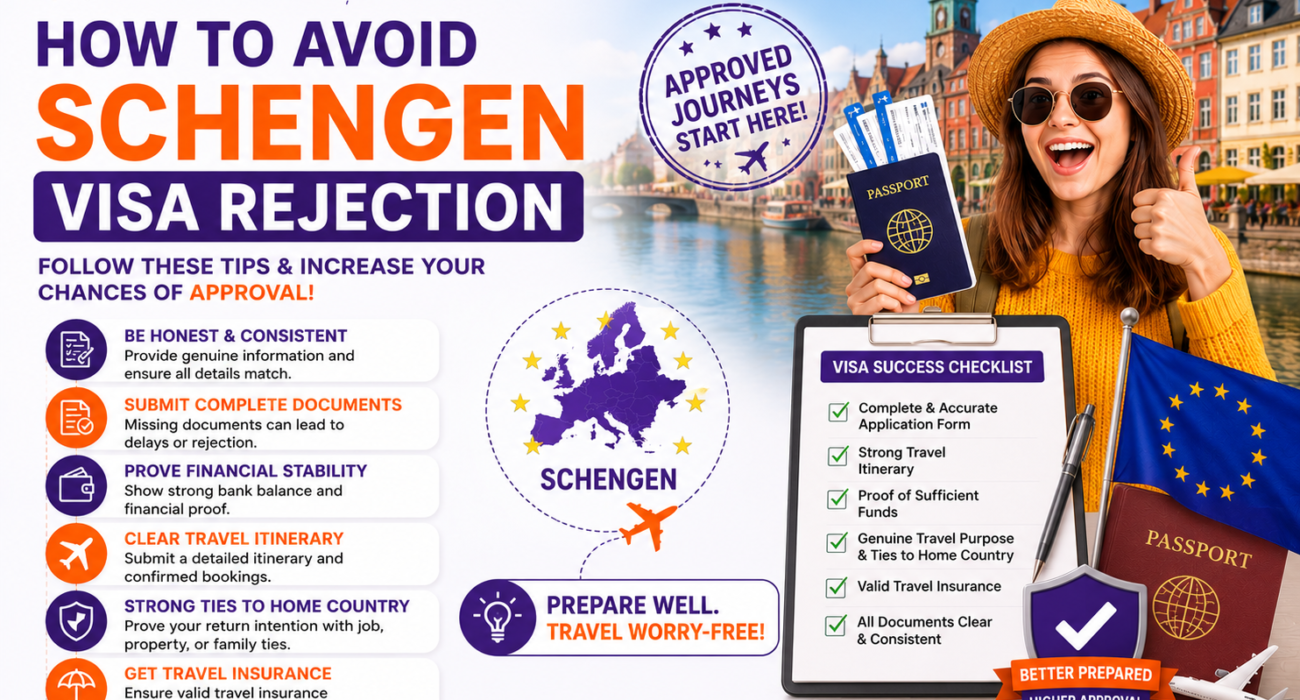
Applying for a Schengen visa can be an exciting step toward your European holiday, business trip, or family visit. However, receiving a visa refusal can be both disappointing and costly. Fortunately, most Schengen visa rejections can be avoided by preparing your application correctly and understanding the requirements beforehand.

Why Are Schengen Visas Rejected?
Schengen embassies carefully review every application to ensure that applicants meet the necessary travel requirements and intend to return to their country of residence after their trip.
Common reasons for rejection include incomplete documentation, insufficient financial evidence, unclear travel plans, invalid travel insurance, and inconsistencies in the information provided.
Understanding these issues before applying can significantly reduce the risk of refusal.
1. Submit Complete and Accurate Documentation
One of the biggest causes of Schengen visa rejection is missing or incorrect paperwork. Every document submitted should be accurate, genuine, and up to date.
Essential Documents Typically Required
- Valid passport with sufficient validity.
- Completed visa application form.
- Recent passport-sized photographs.
- Travel itinerary and flight reservations.
- Hotel bookings or accommodation proof.
- Travel insurance covering the Schengen Area.
- Bank statements showing sufficient funds.
- Employment or business documents.
- Supporting cover letter explaining the purpose of travel.
Always verify the latest requirements with the embassy or visa application centre before submitting your application.

2. Maintain Strong Financial Evidence
Applicants must demonstrate that they have enough financial resources to cover their travel expenses, accommodation, meals, and return journey.
Your bank statements should clearly show:
- Regular income or salary deposits.
- Stable account activity.
- Sufficient available funds.
- No unusual large deposits without explanation.
Providing transparent and consistent financial records helps establish credibility and reduces concerns about your ability to support yourself during your trip.

3. Purchase Valid Schengen Travel Insurance
Travel insurance is a mandatory requirement for all Schengen visa applicants. The policy must meet Schengen regulations and provide medical coverage throughout your entire stay.
Travel Insurance Requirements
- Minimum medical coverage of €30,000.
- Coverage valid across all Schengen countries.
- Protection for medical emergencies and repatriation.
- Coverage for the full duration of your trip.
Using non-compliant insurance policies can result in immediate visa refusal.
4. Prepare a Professional Cover Letter
A well-written cover letter helps visa officers understand the purpose of your visit and your intentions to return after your trip.
Your cover letter should include:
- The reason for travelling.
- Your travel dates and itinerary.
- Information about accommodation arrangements.
- Your employment or business details.
- A statement confirming your intention to return to the UK or your country of residence.
Professional presentation and clarity can positively support your overall application.
5. Demonstrate Strong Ties to Your Country of Residence
Embassies want to see evidence that applicants have genuine reasons to return home after their trip.
Examples of Strong Ties
- Permanent employment.
- Business ownership.
- Property ownership or tenancy agreements.
- Family responsibilities.
- Educational commitments.
Providing supporting documents for these ties helps strengthen your application and reduces concerns regarding overstaying.
Most Common Schengen Visa Refusal Reasons
| Refusal Reason | How to Avoid It |
|---|---|
| Insufficient Financial Means | Provide clear and stable bank statements. |
| Incomplete Documentation | Submit all required supporting documents. |
| Invalid Travel Insurance | Purchase Schengen-compliant insurance. |
| Unclear Travel Purpose | Include a detailed itinerary and cover letter. |
| Lack of Home Ties | Provide employment, business, or family evidence. |
| False or Misleading Information | Ensure complete honesty throughout the application. |

6. Avoid Last-Minute Visa Applications
Submitting your application well in advance provides sufficient time to address any issues or additional document requests from the embassy.
Travel experts generally recommend applying:
- Six to eight weeks before your planned departure.
- Even earlier during peak travel seasons.
Early preparation reduces unnecessary stress and improves the overall application process.
7. Be Honest and Consistent Throughout Your Application
All information provided in your application form, supporting documents, and cover letter should be accurate and consistent.
Any discrepancies between documents can raise concerns and potentially result in a refusal. Honesty and transparency are always the best approach when applying for a Schengen visa.
Frequently Asked Questions
What is the most common reason for Schengen visa rejection?
The most common reasons include insufficient financial evidence, incomplete documentation, invalid travel insurance, and unclear travel intentions.
Can I reapply after a Schengen visa refusal?
Yes. Applicants can reapply after addressing the issues that led to the refusal and providing stronger supporting evidence.
Does a previous visa refusal affect future applications?
A previous refusal does not automatically prevent future approvals, provided the new application resolves the concerns raised by the embassy.
Final Thoughts
Understanding how to avoid Schengen visa rejection is essential for a successful European travel experience. Careful preparation, complete documentation, strong financial evidence, and honest communication can significantly improve your chances of approval.
Whether you are applying for tourism, business, or family visits, following professional guidance and meeting all embassy requirements will help make your Schengen visa application smoother and more successful.